> Blog
Inside the Occlusion Module of the Certificate in Restorative Dentistry
Occlusion sits at the very heart of every restorative decision a dentist makes. Whether placing a single crown, restoring worn dentition or planning complex full mouth rehabilitation, long-term succes...
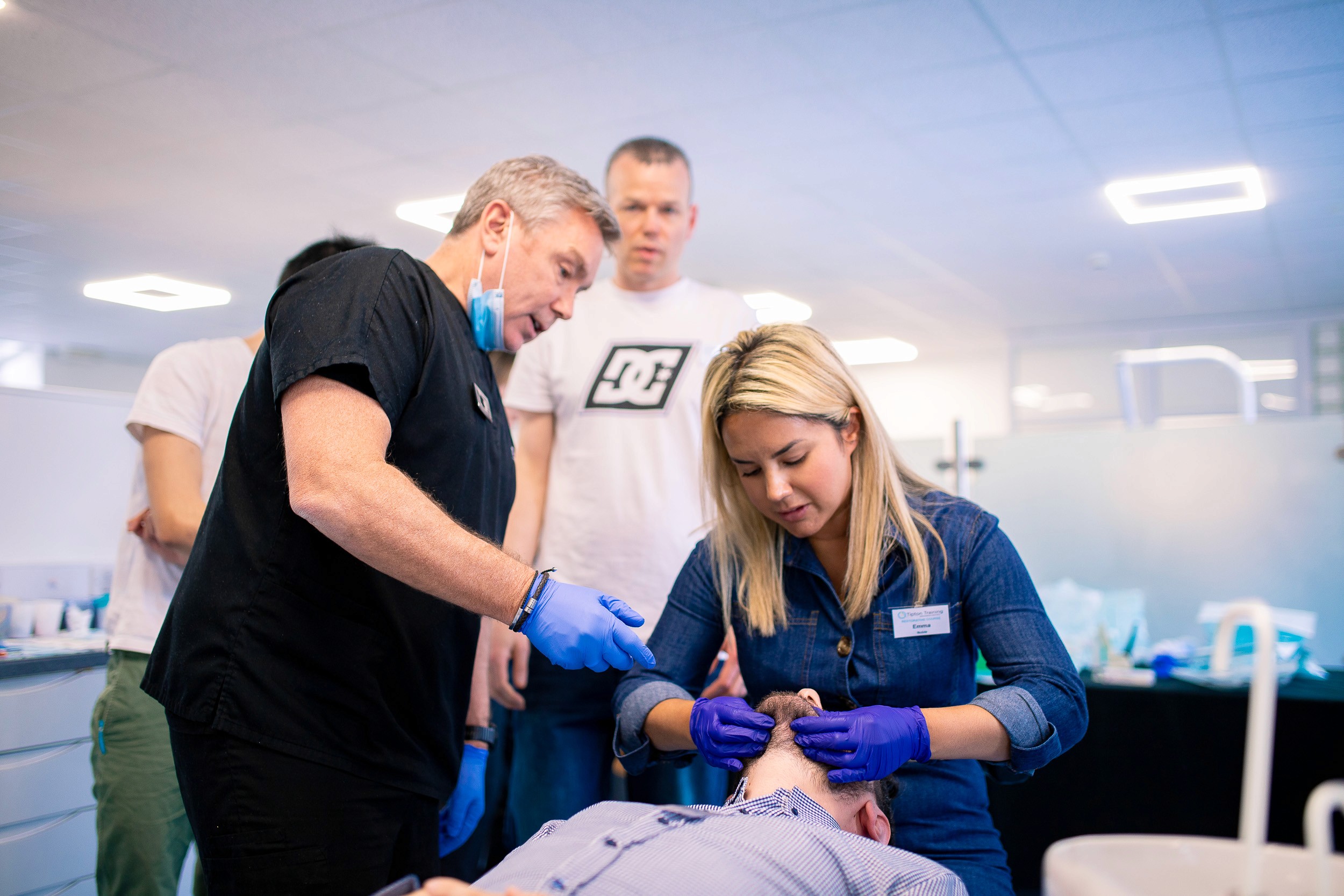
Occlusion sits at the very heart of every restorative decision a dentist makes. Whether placing a single crown, restoring worn dentition or planning complex full mouth rehabilitation, long-term success depends on how restorations function within the occlusal system. When occlusion is poorly understood or overlooked, even technically excellent dentistry can fail.
This is why occlusion forms the backbone of Tipton Training’s Level 7 Certificate in Restorative Dentistry. Rather than being treated as a single lecture or isolated topic, occlusion is revisited and built upon throughout the programme. Under the guidance of Professor Paul Tipton, Founder and Clinical Lead, dentists develop a deep, practical understanding of occlusion as the foundation for predictable restorative outcomes.
Why Occlusion Is the Foundation of Restorative Success
Restorative dentistry is not only about materials, aesthetics or technical execution. Rather, it is about how restorations function over time within a dynamic system that includes teeth, muscles and the temporomandibular joints.
Professor Tipton has long taught that occlusion is the most important subject in dentistry. Without a clear occlusal strategy, restorations may be placed into systems they are unable to tolerate. This can lead to fractured restorations, accelerated wear, patient discomfort and compromised long-term outcomes.
By mastering occlusion, dentists gain the ability to plan treatment with confidence, recognise risk factors such as bruxism and parafunction, and make restorative decisions that are biomechanically sound as well as aesthetically successful.
A Principle-Led Approach to Occlusion
The Occlusion Modules within the Certificate in Restorative Dentistry are designed to support confident, structured clinical decision-making.
By building a clear framework for assessment, planning and execution, the programme helps dentists make evidence-led decisions that improve predictability, reduce risk and strengthen long-term restorative success. Dentists learn how occlusal principles influence treatment planning, when to adopt a conformative or reorganised approach, and how occlusion underpins every restorative pathway from single units to more complex cases.
Module 1: Principles of Occlusion
The first occlusion module establishes the theoretical and practical foundations upon which the rest of the course is built.
AM: Lecture
Dentists explore the core principles that underpin predictable occlusal management, including:
The five principles of occlusion
Slides between RCP and ICP and their clinical significance
Gnathology and Pankey-style occlusal philosophies
The importance of condylar position
Bruxism and its impact on restorative dentistry
Anterior, canine and incisal guidance
Mutually protected occlusion
The significance of non-working side interferences
These concepts provide the framework needed to understand how occlusion influences restorative success and long-term stability.
PM: Practical
Theory is reinforced through hands-on application, including:
Jaw registrations on each other
Facebow registration practicals
De-programming techniques
This practical focus ensures dentists not only understand occlusal principles but can apply them accurately in clinical practice.
Module 2: Occlusal Examinations
Understanding occlusion begins with thorough assessment. Module 2 focuses on giving dentists a clear, repeatable system for examining and diagnosing occlusal conditions.
AM: Lecture
Key topics include:
Examination of the TMJs
Muscle palpation and functional assessment
The importance of RCP contact when crowning
Classification of lateral movements
How occlusal slides influence treatment planning
Conformative versus reorganised approaches
The four factors that identify an occlusal plan
Canine disclusion and cusp angle considerations
This module helps dentists move beyond surface-level assessment and develop confidence in identifying and managing occlusal risk.
PM: Practical
Occlusal examination practicals carried out on each other
Dentists leave with a structured, clinically relevant approach to occlusal examination that directly informs restorative decision-making.
Module 6: Digital Articulators
This module focuses on helping dentists understand the role of articulators in achieving accurate, predictable occlusal outcomes, both in analogue and digital workflows.
AM: Seminar
Dentists explore the principles behind articulator selection and use, including:
Choosing the right articulator for different clinical scenarios
Average value articulators and their applications
The importance of articulators in restorative accuracy
The role of the facebow in analogue and digital workflows
Semi-adjustable and fully adjustable articulators
Digital articulators and their clinical relevance
The importance of condylar inclination
Bennett movement versus immediate side shift
Bennett angle versus progressive side shift
Digital versus analogue articulators
Understanding why restorations can seat high and how to prevent it
This morning session provides clarity on how articulators can influence occlusal accuracy and restorative fit.
PM: Practical
Hands-on learning includes:
Demonstration of analogue model mounting
Discussion and demonstration of digital splint design
Modern splint fabrication compared with traditional methods
Analysis of mounted models for accuracy
Identifying sources of error and how to avoid them
This practical session reinforces the importance of precision when transferring occlusal records, both in analogue and digital systems.
Module 9: TMJ / Splints
Module 9 looks at understanding temporomandibular disorders and the role of splints in diagnosis, management and restorative planning.
AM: Seminar
Dentists cover key concepts including:
Understanding the causes of temporomandibular disorders (TMD)
Different treatment approaches for TMD
Therapies versus splint-based management
Types of splints and their indications
How to adjust splints correctly
Success rates and cost considerations
Tanner appliances
Anterior repositioning splints
Anterior splints and deprogrammers
Strategies for avoiding a closed lock
Classification of joint clicking
After this session, dentists will have a clear understanding of how splints are used – diagnostically and therapeutically – in occlusal management. By the end of the day, each delegate will have their very own custom splint to take home and wear.
PM: Practical
Practical training includes:
Splint adjustment practicals on each other
Use of T-Scan in adjusting and fitting splints
This practical builds confidence in assessing, adjusting and refining splints to improve comfort, function and occlusal stability.
Module 14: Treatment Planning
This module brings together occlusal assessment, aesthetics and function to support structured treatment planning for larger restorative cases.
AM: Lecture
Key topics include:
Treatment planning complex restorative cases and sequencing treatment
Dahl appliances, diagnostic waxing and the curve of Spee
Boyle’s plane analyser and the importance of the occlusal plane
Vertical dimension and facial aesthetics
Golden proportion in restorative dentistry
Pink porcelain, emergence profile and soft tissue position
Introduction to Modjaw and T-Scan and their role in treatment planning
Custom-made anterior guidance tables
Post-seminar, dentists will be equipped to translate occlusal analysis into clear, practical treatment plans for complex restorations.
PM: Practical
Hands-on sessions include:
Treatment planning using articulators
Diagnostic waxing
Occlusal adjustment on models to establish the final occlusal scheme
Deciding when to reorganise occlusion or work conformatively
Dentists will leave with a clear approach to planning complex restorative cases with confidence and predictability.
Module 15: Advanced Occlusion
As the course progresses, occlusion is revisited at an advanced level, allowing dentists to refine their thinking when managing more complex clinical scenarios.
AM: Seminar
Advanced concepts include:
Load testing the joint
Selecting an appropriate condylar position
Different types of canine guidance
Occlusal adjustment principles
Progressive and programmed guidance
Long and wide centric and freedom in centric
Occlusal considerations in Class II patients
These sessions focus on applying occlusal principles to complex restorative and functional cases.
PM: Practical
Hands-on training includes:
Lucia jig practicals
Use and introduction of Modjaw and T-Scan in restorative dentistry
Jaw registrations
De-programming techniques
Splint adjustments
This advanced practical work bridges traditional occlusal concepts with modern digital tools, ensuring dentists can apply occlusion confidently in contemporary practice.
Integrating Occlusion Across the Certificate
Occlusion is far more than just a one-day subject. As dentists progress through the Certificate in Restorative Dentistry, their understanding of occlusion develops alongside their restorative skills. By revisiting occlusion at multiple stages, the course ensures principles are reinforced, refined and applied in increasingly complex clinical contexts.
This spiral approach allows dentists to seamlessly integrate occlusion into their restorative workflow rather than treating it as a separate discipline.
Why Choose Tipton Training
Choosing where to undertake postgraduate training is a significant decision. Beyond course content alone, the quality of teaching, depth of clinical expertise and credibility of accreditation all play a defining role in how effectively learning translates into everyday practice. Tipton Training has built its reputation on delivering education that is clinically relevant, academically robust and designed to support long-term professional development.
Led by Experts in Restorative Dentistry
Delegates benefit from learning under the mentorship of Tipton Training Academy’s expert faculty, operating under the guidance of
Professor Paul Tipton, one of the most respected and influential figures in modern British dentistry. Professor Tipton is widely recognised for his expertise in restorative and prosthodontic dentistry, alongside his long-standing commitment to raising clinical standards through education.
All senior lecturers within the faculty are experienced, practising clinicians. Each brings a depth of clinical insight to their teaching, creating a supportive academic environment that strengthens both knowledge and confidence. This expert-led approach encourages dentists to think critically about occlusion, understand the rationale behind treatment decisions and apply principles with clarity rather than relying on memorised protocols.
Accreditation That Reflects Educational Excellence
The Certificate in Restorative Dentistry is accredited at Level 7 by EduQual, confirming that the programme meets postgraduate, master’s-level academic and clinical standards. This ensures the curriculum is rigorously structured, independently assessed and recognised both in the UK and internationally.
In addition, Tipton Training is the first private dental education provider in the UK to be accredited by the Royal College of Surgeons of England. This accreditation reflects the quality of the teaching, curriculum design, assessment processes and faculty expertise, providing delegates with reassurance that their training meets the highest professional benchmarks.
By training in a prestigious, fully accredited environment led by industry-leading experts, dentists gain a gold-standard education designed to elevate their clinical careers.
Building Confidence and Predictability in Restorative Dentistry
Occlusion underpins every successful restorative outcome. By mastering occlusal principles, dentists can plan treatment with greater confidence, reduce complications and deliver restorations that function comfortably and predictably over time.
Discover how Tipton Training’s Certificate in Restorative Dentistry can help you build predictable, confident restorative outcomes through a deeper understanding of occlusion. Upcoming cohorts are taking place in:
Glasgow – March 2026
Manchester – April 2026
London – April 2026
Belfast – April 2026
Carlow – September 2026
With high demand for seats across locations, early registration is strongly advised.